
Housing & Construction
Housing Recovery & Construction Assistance
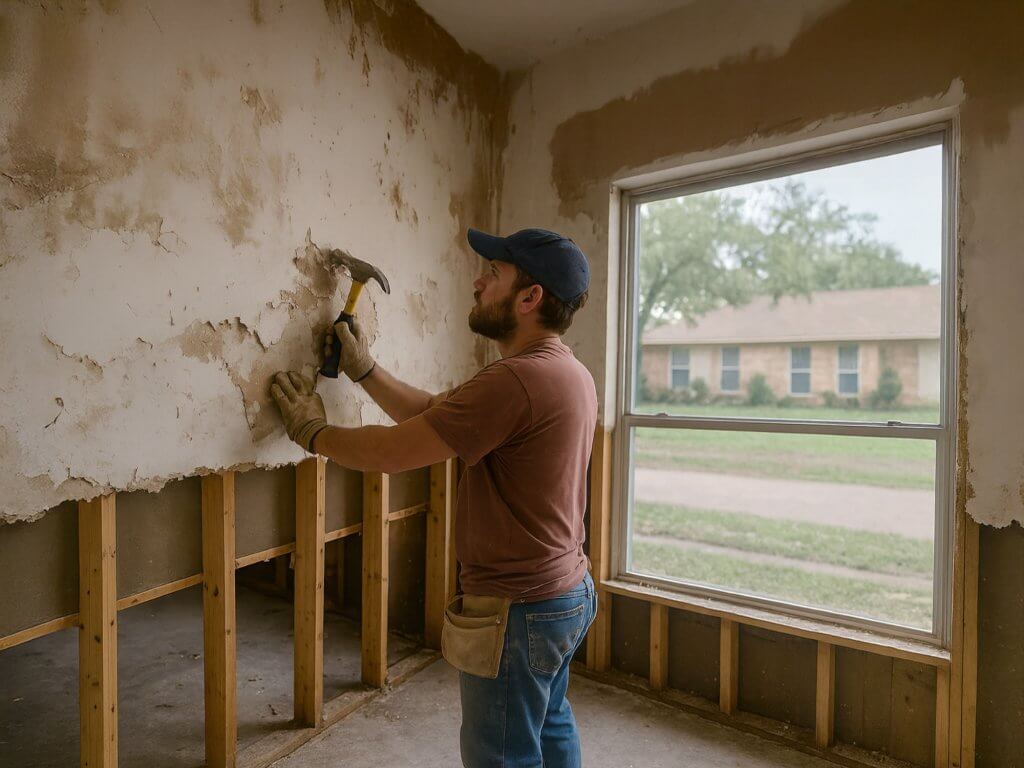
The Housing Coordination Working Group is dedicated to helping every affected resident achieve a move-in ready, safe, sanitary, secure, and furnished home. This is your guide to navigating the rebuilding process and understanding construction requirements in Kerr County.
The Housing Recovery Process
Assistance for flood-damaged homes is routed through the HPS SBP Housing Office and involves local Volunteer Organizations Active in Disaster (VOADs) and builders. The recovery process utilizes three tracks.
Minor Repair
Addresses cosmetic or non-structural issues required to make the home or business safe and habitable.
Major Repair
Addresses significant structural damage, including foundation, roof, or systems.
Total Rebuild
Necessary when the home or business is a total loss or structurally irreparable. Involves full design, permitting, elevation mitigation as required, construction, inspections, and final walk‑through.
What Happens After Submitting Your Survey
- Case review and site verification.
- Track assignment and scope of work.
- Permit and funding alignment.
- Materials, labor, and work sequencing.
- Quality and safety checks for move‑in readiness.
Permitting & Floodplain Development
Before repairing or rebuilding, property owners must understand local regulations. Working without permits can jeopardize safety, insurance, and future assistance.
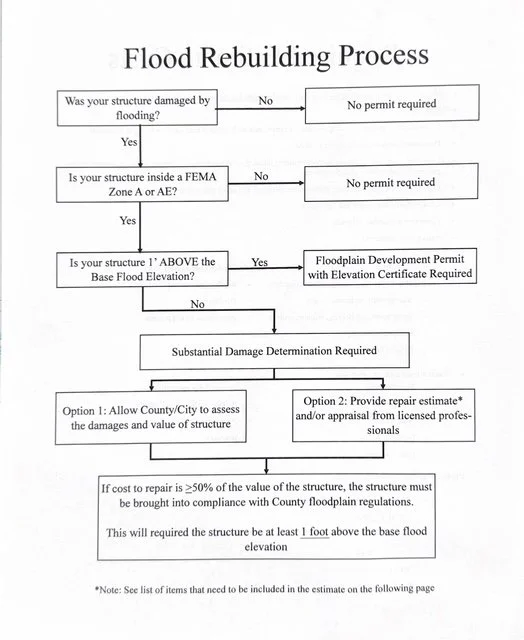
If your structure was damaged, a Substantial Damage (SD) Assessment must be conducted to determine if the damage exceeds 50% of the market value.
- Check your address against local floodplain maps.
- Request SD Assessment if not already completed.
- Apply for required permits before work begins.
- Schedule inspections at each stage and keep approvals in your records.
If your property is in a floodplain, a Floodplain Development Permit is required for any repair or construction work. This is essential for compliance and future mitigation.
Review the official steps and secure necessary permits from the County before starting work.
Contractor Fraud Prevention
Unfortunately, disasters attract fraudulent contractors. The Kerr Together Long-Term Recovery Group (KTLRG) strongly advises exercising extreme caution. Protect your family and funds.
- Verify contractors hold the appropriate license and insurance for work to be done and ask for references and recent permits.
- Get 2–3 written bids with scope, materials, timeline, and change‑order process.
- Use staged payments after inspected milestones and pay by a traceable method. Do not agree to pay cash up‑front.
- Keep copies of IDs, contracts, lien waivers, and permits.
- High‑pressure sales, door‑to‑door solicitations, and requests to sign over insurance checks.
- “Too‑good‑to‑be‑true” bids, large up‑front deposits, or no written contract.
- Work that starts before permits are issued or inspections are scheduled.
- Kerr County Sheriff’s Office (non‑emergency): 830-896-1216
- Texas Attorney General Consumer Protection: 800-621-0508
- Texas Department of Insurance (TDI) – Fraud & Complaints: 800-252-3439
- U.S. Department of Justice (DOJ) – National Center for Disaster Fraud (NCDF): 866-720-5721

Debris & Waste Removal
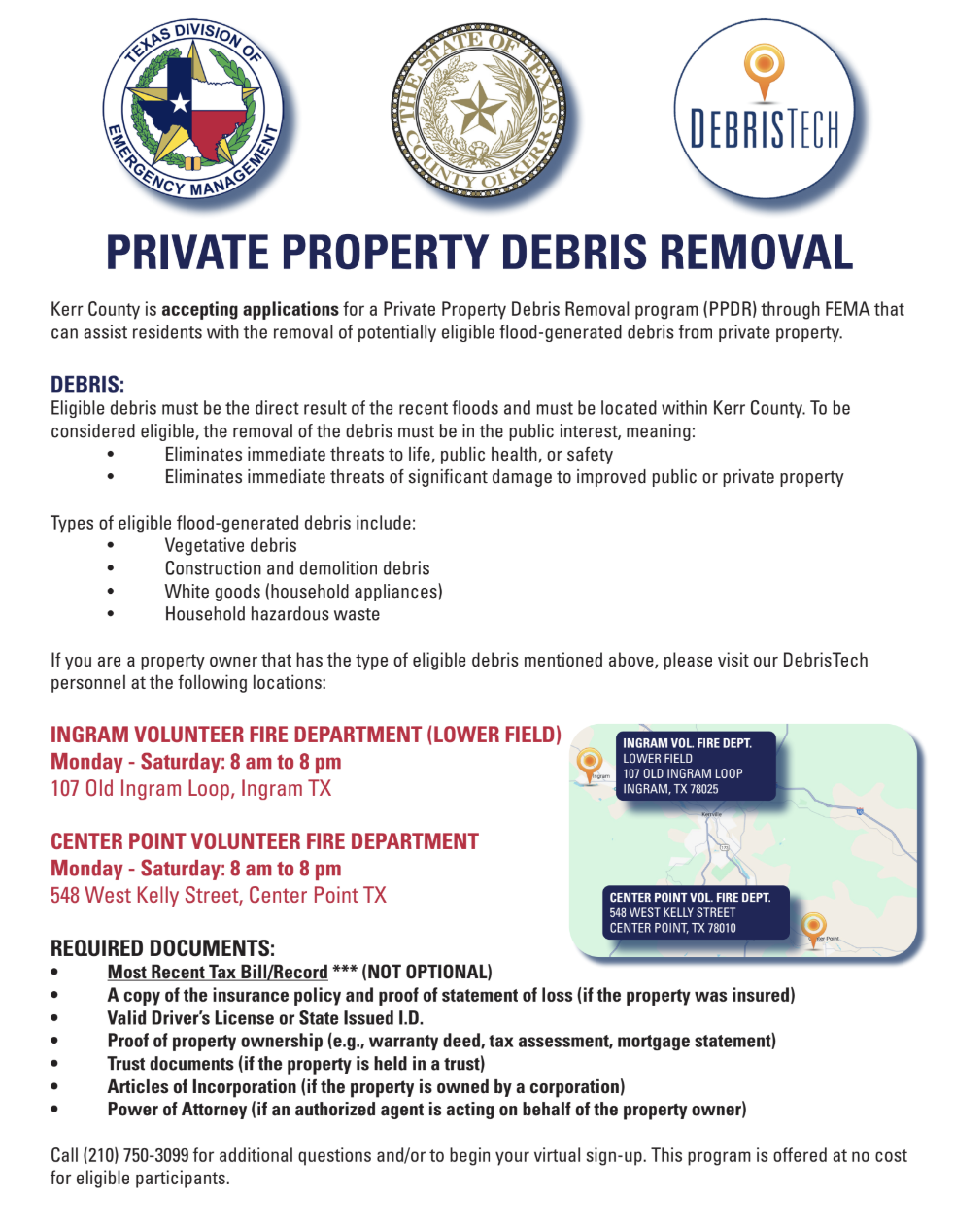
Programs and sites change over time. Follow the latest Kerr County updates for curbside debris collection, transfer station options, and any special drop‑off events. If curbside programs have closed:
- Self‑haul to approved facilities. Separate debris by type (construction, appliances, vegetation, hazards).
- Keep photos and receipts for potential reimbursement.
- Do not place personal keepsakes intended for recovery in debris piles.
Next Steps
To access the funding, builders, and materials necessary for home and business repair, you must complete the initial Needs Assessment survey.